
Loading...
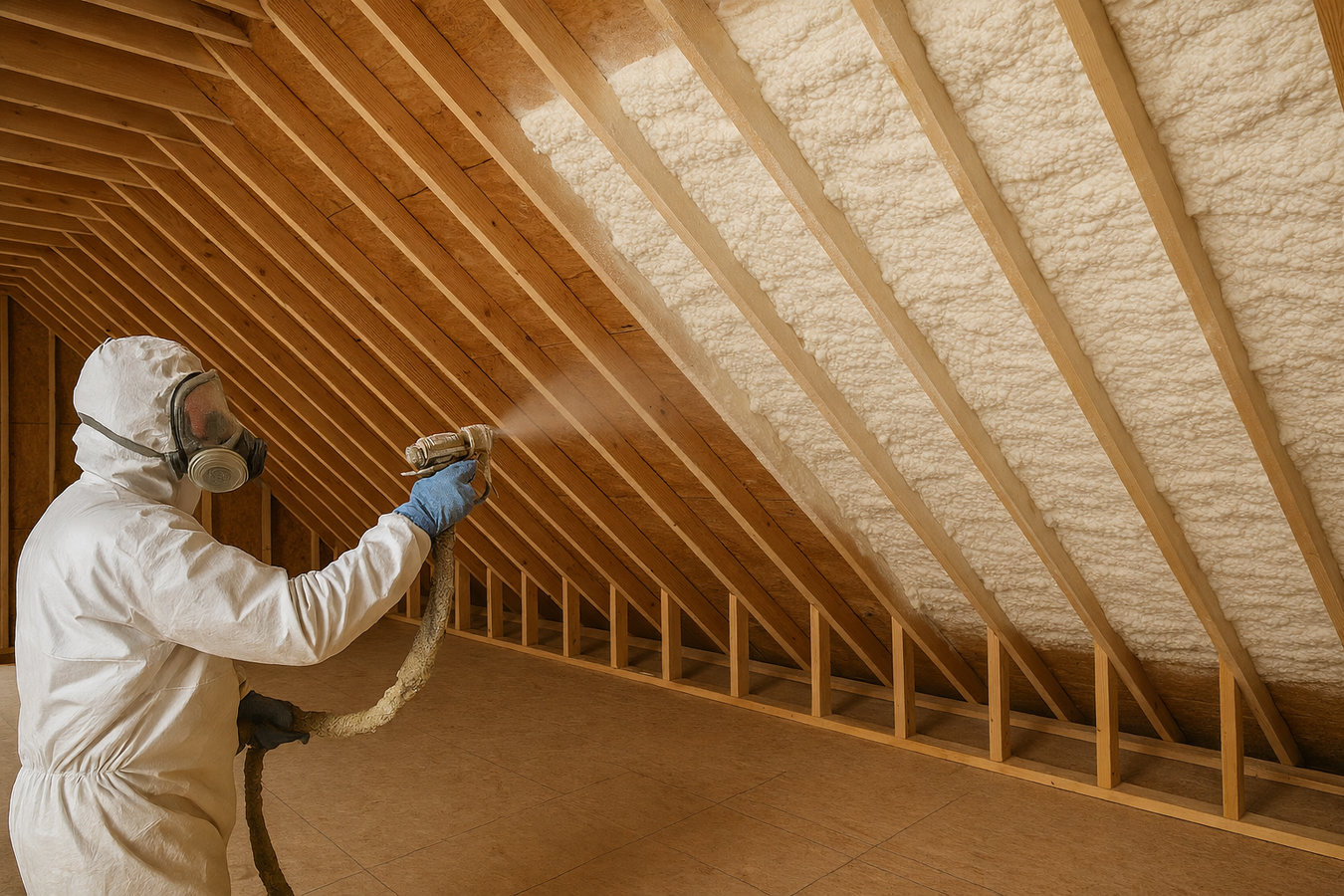
Gaps in your attic floor let your heating dollars escape every night. We find every opening and close it so your home holds heat through Indiana winters without your furnace running overtime.
Attic air sealing in West Lafayette means a contractor finds every gap, crack, and opening in your attic floor and closes them so heated air cannot escape your living space - most jobs take one to two days and require no disruption to your daily routine.
The openings are usually hidden in places you would never think to look: around recessed lights, plumbing pipes, and the tops of interior walls where they meet the attic floor. In West Lafayette, homes near Purdue University built in the 1950s through 1970s commonly have dozens of these gaps that have never been addressed. Many homeowners who have attic air sealing done also benefit from pairing it with broader air sealing services to close gaps in the basement rim joist and exterior walls at the same time.
The U.S. Department of Energy recognizes attic air sealing as one of the highest-return energy improvements a homeowner can make, particularly in cold-climate states like Indiana where heating season runs from October through April.
West Lafayette winters are genuinely cold, and if your energy bills climb sharply each year without a clear explanation, heat escaping through attic gaps is one of the most common causes. Heat rises, and if your attic floor has openings, the warm air you are paying for flows straight out of your living space. If your bills feel out of proportion to the size of your home, an attic inspection is a smart first step.
If one bedroom stays freezing all winter while the rest of the house feels fine, air leaks in the attic are creating pressure imbalances that pull conditioned air out of certain rooms faster than others. This is a very common complaint in West Lafayette's older neighborhoods where homes were built without today's energy standards. The problem is usually fixable without a major renovation.
Stand under your attic access panel on a cold day and hold your hand near the edges. If you feel cool air moving, or can see light coming through gaps around the frame, your attic is not sealed. This is one of the easiest leaks to spot and one of the most common entry points for cold air in older homes across West Lafayette.
Ice dams form when heat escaping through the attic melts snow unevenly on the roof surface. The meltwater refreezes at the cold eaves, forming a ridge that can back water under shingles and into your home. If you have seen ice build up along your roofline after a snowfall, the attic floor is almost certainly not sealed properly - and sealing it is the most effective long-term fix.
We begin every attic air sealing job with a proper assessment. For thorough work, that means a blower door test - a large calibrated fan fitted into your front door that measures exactly how much air your home is losing and where the biggest sources are. We then seal gaps in the attic floor using spray foam, caulk, and the right material for each specific location. Common targets are recessed light cans, plumbing and wiring penetrations, the tops of interior partition walls, and the attic hatch itself.
Once the sealing is complete, we run the blower door test again so you have a real before-and-after measurement - not just our word that the work made a difference. For homes where the attic needs more than just sealing, we can also discuss adding retrofit insulation on top of the sealed floor in the same visit, which is the combination that delivers the strongest energy savings.
Best for homes with high heating bills, ice dam history, or rooms that never warm up in winter - the most common starting point.
Ideal for homeowners who want a documented measurement of air leakage before and after the work, useful for rebate and tax credit paperwork.
Suited to homes where the pull-down stair or hatch cover is a major air leak point - often the easiest and fastest fix.
For homes that need both sealing and added insulation, done together in the right order for the best overall performance.
West Lafayette sits in a climate zone where winter temperatures regularly drop into the single digits and heating season runs from October through April. That wide swing means your attic is working against you year-round - letting heat escape in January and letting radiant heat pour in during July. Air sealing pays off faster here than in milder climates because your heating and cooling systems run hard for a large portion of the year. Many homes in West Lafayette were built in the 1950s through 1980s, when insulation standards were far lower than they are today and attic air sealing simply was not part of the construction process.
We serve West Lafayette and the surrounding area including Lafayette. Homes near Purdue's campus that have cycled through multiple renters are especially likely to have attics where insulation was added over the decades without anyone ever sealing the gaps underneath - which is like putting a thick blanket over a window you left open. Addressing the sealing first, then the insulation, is the order that actually works.
We respond within 1 business day. We will ask about your home's age, what you have been noticing, and when works for a visit. Most West Lafayette contractors can schedule within one to two weeks, though fall slots fill faster.
We walk through your home and spend time in the attic before quoting anything. The best jobs start with a blower door test that measures exactly how much air your home is losing - this takes about an hour and gives you a real picture, not a guess.
We walk you through what we found and what we recommend. A good estimate explains which areas need sealing, what materials we will use, and what the job will cost. This is also the time to ask about utility rebates and the federal tax credit.
The crew seals gaps and runs the blower door again after the work is complete. You receive a before-and-after reading and all the paperwork you need for your rebate or tax credit application before we leave.
Free estimate. No obligation. We test before and after so you can see the difference in real numbers.
(765) 637-0109We measure air leakage before and after every attic air sealing project using a blower door. You get a real number showing how much the leakage rate dropped - not just our word that the work made a difference. This documentation also supports your utility rebate and federal tax credit paperwork.
We work throughout West Lafayette and the broader Tippecanoe County area, which means we know the housing stock here - older homes near Purdue's campus, postwar ranches in Happy Hollow, and newer subdivisions on the west side of town. Each type presents different air sealing challenges, and we know what to look for in each.
The federal tax credit for air sealing improvements and Indiana utility rebates both require specific paperwork from the contractor. We know what each program needs and provide it before we leave the job site. You should not have to chase down documentation after the fact.
Indiana's freeze-thaw winters and humid summers create specific challenges for attics - frost on the attic floor, moisture in insulation, and gaps that expand and contract with temperature swings. We have seen these conditions repeatedly and know what a properly sealed attic needs to hold up through all four seasons in West Lafayette.
We combine diagnostic testing with hands-on attic work and full incentive documentation. For West Lafayette homeowners, that means a job done right the first time and every dollar of available credit in your pocket.
Learn more about air sealing standards and incentives at the Building Performance Institute and the IRS Energy Efficient Home Improvement Credit.
Adding insulation to an existing home without opening walls, targeting the attic, walls, and crawl space for the biggest comfort gains.
Learn moreWhole-home air sealing that addresses gaps in the attic, basement rim joist, and wall penetrations in a single visit.
Learn moreFall appointments fill fast - contact us today for a free estimate and start feeling the difference before the first cold snap.