
Loading...
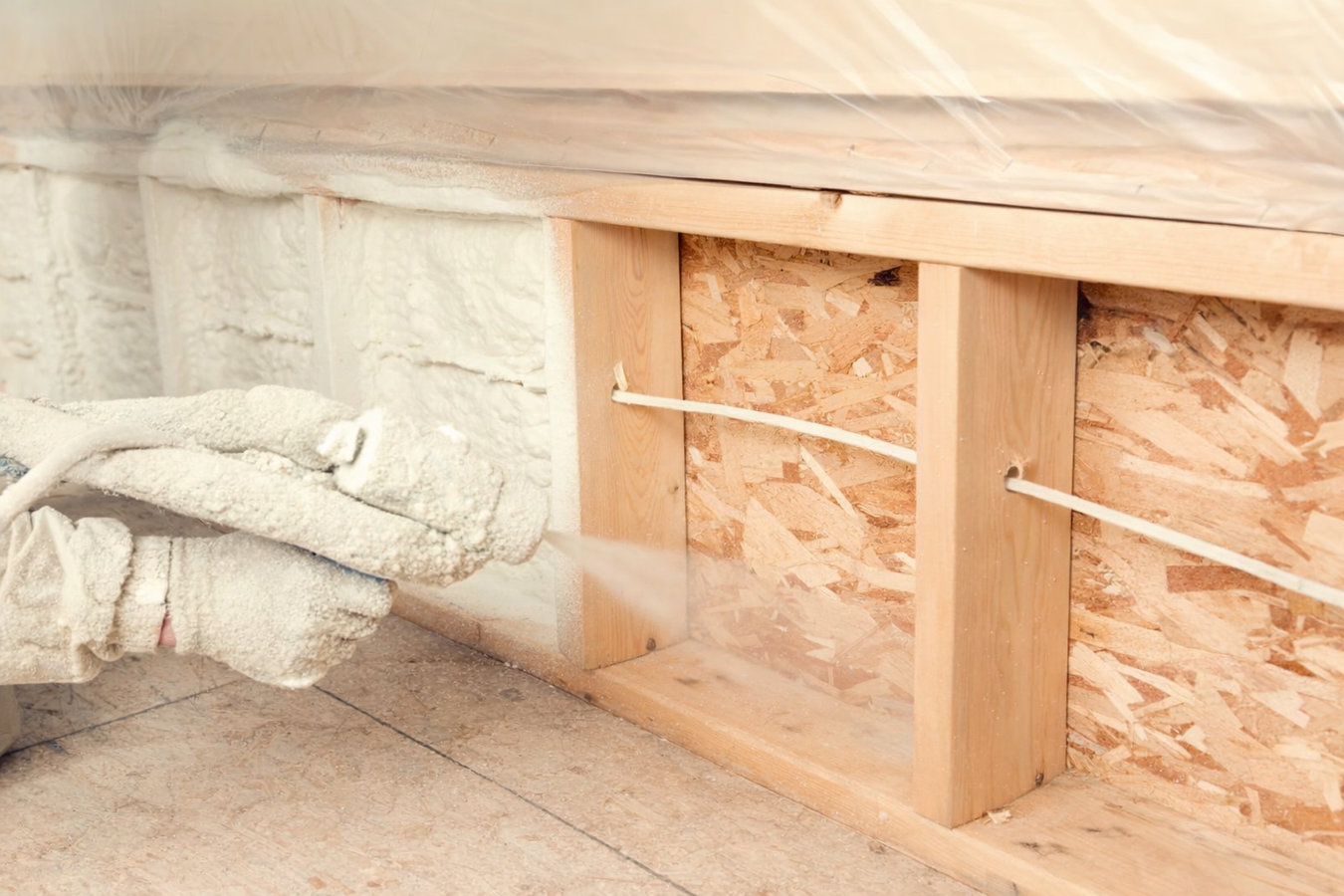
Cold rooms, high winter bills, and musty crawl spaces often trace back to the same root cause - air moving through gaps that ordinary insulation cannot seal. Closed-cell foam fixes that permanently in one application.
Closed-cell foam insulation in West Lafayette starts as a liquid and expands into a firm, dense layer that blocks both heat transfer and air movement - most residential jobs are completed in one day, often just a few hours for a single-zone project. What sets it apart is that it seals gaps and insulates at the same time. Most insulation types - batts, blown-in, rigid board - slow heat transfer but do not stop air from moving through the framing. Closed-cell foam does both, which is why it is the go-to choice for rim joists, crawl spaces, and any area where air leakage is a known problem.
The material also has very low moisture permeability, which matters in a climate like West Lafayette where humid summers drive moisture into crawl spaces and below-grade areas. Many homeowners discover that a musty smell in the basement or crawl space disappears within a season after closed-cell foam is applied, because the moisture pathway is closed off at the source. For homes that need broader coverage, closed-cell foam is often paired with spray foam insulation across multiple zones.
The Spray Polyurethane Foam Alliance sets installation standards and best practices for this type of work. Contractors who follow those standards apply foam at the correct thickness and do not rush through corners or hard-to-reach spots where thin coverage fails first.
West Lafayette winters are genuinely cold, and a home that is not well sealed bleeds heat through gaps you cannot see. If your gas or electric bill jumps significantly in the coldest months without a change in your thermostat habits, conditioned air is escaping somewhere. Closed-cell foam is specifically designed to stop that invisible air leakage at the source.
Stand near an exterior wall or crouch near the floor on a cold January day. If you feel a noticeable chill, air is getting in through gaps in the framing, rim joists, or foundation. This is especially common in West Lafayette homes built before 1990, where the connection between the foundation wall and the floor framing was rarely insulated at all.
A musty smell in your lower level usually means warm, humid summer air is entering through an unsealed crawl space and condensing on cooler surfaces. West Lafayette summers are humid enough that this is a recurring problem in homes with vented or poorly sealed crawl spaces. Closed-cell foam applied to the crawl space walls and ceiling stops that moisture movement at the source.
If a room above your garage or over a crawl space is always too cold in winter or too hot in summer regardless of your thermostat setting, the floor or ceiling assembly below that room is likely missing effective insulation. Garages and crawl spaces are two of the most under-insulated areas in older West Lafayette homes, and they directly affect comfort in the rooms above them.
We apply closed-cell spray foam across the most common problem areas in West Lafayette homes: rim joists where the floor framing meets the foundation wall, crawl space walls and ceilings, basement walls, and attic roof decks where conditioned space needs to stay separated from unconditioned area. The material expands to fill every gap and hardens within minutes, creating an air barrier that does not shift or settle over time. For homeowners comparing options, we also install open-cell foam insulation, which is lower in density and better suited to interior wall cavities and sound control where moisture resistance is less critical.
Every closed-cell foam job starts with an on-site assessment. We look at the area in question, check for moisture or structural issues that should be addressed before foam is applied, and give you a written estimate that explains exactly what is proposed and why. We handle any required permit coordination through Tippecanoe County before work begins - you do not need to manage that yourself.
Best for any home over 20 years old - rim joists are one of the highest-impact, lowest-disruption areas to seal in an older Indiana home.
Best for homes with vented or poorly sealed crawl spaces - stops moisture movement and air infiltration in a single application.
Best for basements with past moisture history - closed-cell foam resists water vapor while providing a high R-value per inch.
Best for homes with HVAC equipment in the attic or finished attic space - brings the attic into the conditioned envelope and eliminates duct heat loss.
West Lafayette regularly sees winter temperatures drop into the single digits, and the heating season runs from October through April - roughly half the year. Homes that are not well air-sealed lose heat fast through rim joists, crawl spaces, and attic edges, and a large share of the West Lafayette housing stock was built in the 1950s through 1980s under insulation standards far lower than what is required today. Many of those homes have little or no insulation in their crawl spaces and rim joists, which are exactly the areas where closed-cell foam makes the most immediate difference in comfort and energy cost. If you own a home in one of the older neighborhoods near Purdue and have never had a professional look at these areas, there is a good chance you are heating air that escapes before it reaches your living rooms.
We serve homeowners throughout West Lafayette and the surrounding region, including Kokomo. West Lafayette summers are also humid enough that moisture management is a real concern in below-grade spaces, and closed-cell foam handles both the insulation and the moisture barrier in one step - which is why it is often the first recommendation for crawl spaces and rim joists in this area.
We respond within 1 business day. You do not need to prepare anything - just describe the area you are concerned about and roughly how old your home is. This is not a sales call.
We visit your home to measure the work area, check for moisture or structural issues, and confirm the right application. You receive a written estimate covering exactly what will be done and why.
Once you decide to move forward, we schedule the job and handle any required permits through Tippecanoe County. Permit timelines here are typically short - this step rarely adds more than a few days.
The crew arrives, sets up the spray equipment, and applies the foam in controlled passes. Plan to be out of the home during spraying and for two to four hours after. Your contractor will give you a specific re-entry time before work begins.
Free on-site assessment. Written estimate. No obligation. We explain what we find and let you decide.
(765) 637-0109We look for water intrusion before any foam goes in. Applying closed-cell foam over an active moisture problem traps that moisture, which can cause mold and wood rot that costs far more to fix than the insulation. If we find something, we tell you plainly what needs to happen first.
For projects that require a permit through Tippecanoe County, we pull it before work begins. Permitted work gets inspected by someone independent of us - which is a benefit to you, especially if you plan to sell the home later and a buyer orders an energy audit.
We serve West Lafayette and 11 additional communities across Indiana. Local crews familiar with the housing stock, soil conditions, and permit processes in each area - not a franchise learning your market on your project.
We follow installation guidelines from the Spray Polyurethane Foam Alliance, which covers proper thickness measurement, ventilation protocols, and re-entry timing. A contractor who follows those standards is less likely to cut corners in spots you cannot see after the work is done.
Closed-cell foam is one of the higher-cost insulation options per square foot, which makes getting the installation right the first time more important - not less. Thin spots, skipped corners, and improper moisture prep are the three most common ways these jobs fail, and avoiding all three starts with a thorough assessment before anyone picks up a spray gun.
For safety guidelines on spray foam re-entry and occupant protection, see the EPA guidance on spray polyurethane foam insulation.
Open-cell foam is a lower-density alternative suited to interior walls and sound control where moisture resistance is less of a priority.
Learn moreSpray foam insulation covers both closed-cell and open-cell options - a broader look at where and how each type fits different areas of your home.
Learn moreClosed-cell foam permanently closes the air leaks that make West Lafayette winters feel worse inside your home than they should - and the sooner it goes in, the sooner you stop paying for heat that escapes before it reaches your rooms. Call us or request a free estimate today.